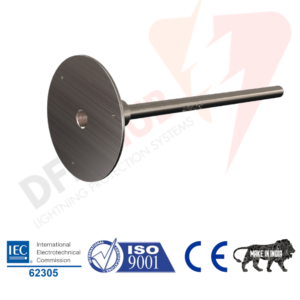
Structural Earthing System – Engineered for Indian Buildings & Infrastructure (ARK Make by DFMHUB)
Electrical safety failures in buildings are not caused by equipment alone — over 65% of electrical faults in India are directly linked to inadequate earthing and grounding systems (CEA safety audit observations, 2023).
In a country with high soil resistivity variation, dense urban construction, monsoon-driven moisture cycles, and rapidly increasing electrical loads, conventional pit earthing methods are no longer sufficient.
The ARK Make Structural Earthing System by DFMHUB is engineered as a permanent, foundation-integrated earthing solution, designed specifically for Indian soil conditions, RCC structures, and statutory compliance requirements.
What Is a Structural Lightning Protection System?
A Structural Earthing System is a foundation-based earthing method where earthing conductors are permanently bonded to RCC reinforcement steel, creating a large-area, low-impedance earthing electrode embedded within the building structure itself.
Key Engineering Characteristics:
- Uses RCC rebars as natural electrodes
- Fully concealed & maintenance-free
- Extremely stable resistance values
- Long service life (50+ years)
The ARK Make system by DFMHUB enhances this concept using engineered copper-bonded conductors, tested clamps, and documented bonding methodology.
Why Structural Lightning Protection Is Critical?
High-rise buildings, industrial plants, substations, and solar installations are vulnerable to direct lightning strikes. Structural LPS ensures:
- Concealed protection within RCC
- Reduced corrosion risk
- Enhanced safety and structural integrity
- Compliance with international standards
Complete Structural Earthing System Overview – ARK Make
The ARK Structural Earthing System is not a single product — it is a coordinated system consisting of conductors, bonding components, test points, and documentation. System Architecture Flow:
- Foundation rebar bonding
- Horizontal earthing conductor network
- Vertical take-off points
- Equipment bonding
- Test & inspection access
Component-Wise Breakdown
| Component | Material | Function |
|---|
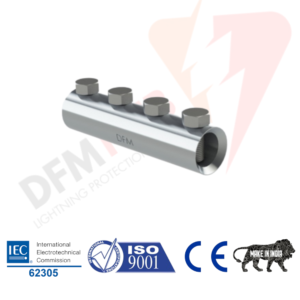
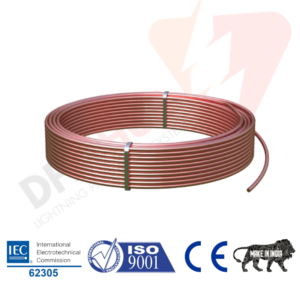
| Copper Bonded Conductor | 10mm Copper Coated | Primary current dissipation |
| Rebar Bonding Clamp | SS/GI | Electrical continuity with RCC |
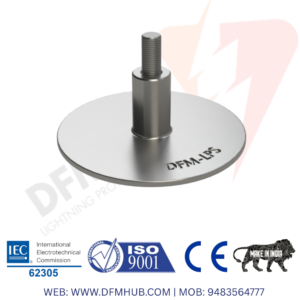
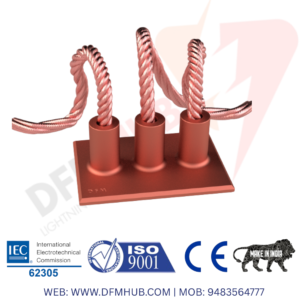
| Earth Fixed Point | SS/GI | External testing & inspection |
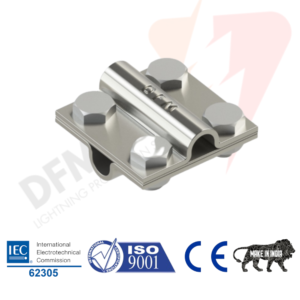
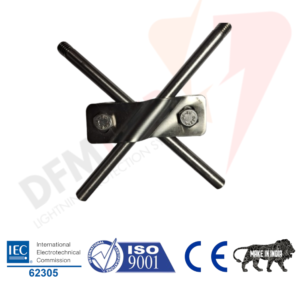
| Cross and Parallel Connector | SS/GI | Mechanical fixing |
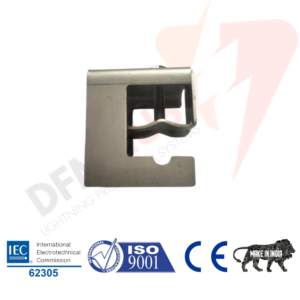
| Strip Holder / Saddle | SS/ GI | Mechanical fixing |
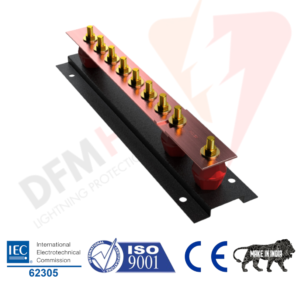
| Equipotential Bonding Bar | SS/CU | External testing & inspection |
REQUEST : TECHNICAL DATA SHEET
Structural Earthing Design Methodology
Engineering Design Process Used by DFMHUB
Step 1: Soil & Site Assessment
- Soil resistivity testing
- Moisture & salinity analysis
Step 2: Building Load Evaluation
- Fault current estimation
- Lightning risk assessment
- Equipment sensitivity mapping
Step 3: Earthing Network Design
- Rebar bonding grid layout
- Conductor sizing
- Redundancy paths
Step 4: Resistance Targeting
- ≤1 Ohm (critical)
- ≤2 Ohm (commercial)
- ≤5 Ohm (residential)
Step 5: Documentation & As-Built Drawings
- Inspection-ready layouts
- Compliance records
REQUEST: TALK TO OUR EXPERTS
Indian Standards & Regulatory Compliance
| Standard / Regulation | Applicability |
|---|
| IS 3043:2018 | Code of Practice for Earthing |
| CEA Safety Regulations | Mandatory for electrical systems |
| NBC of India | Building safety compliance |
| IEC 62305 | Lightning protection interface |
✔ ARK Make systems are designed to comply at the planning stage, not retrofitted later.
Industry-Wise Applications Across India and Where Structural Earthing Is Essential
| Industry | Use Case |
|---|
| High-rise Residential | Lift & DG safety |
| Commercial Buildings | Fire & surge protection |
| Data Centers | Sensitive equipment grounding |
| Hospitals | Patient safety |
| Substations | Fault current dissipation |
| Solar Power Plants | Inverter & array grounding |
| Industrial Plants | Motor & PLC protection |
Advantages of Structural Earthing over Conventional Lightning Protection system.
- No exposed conductors
- Longer service life
- Lower maintenance requirements
- Architecturally invisible solution
- Consultant-preferred lightning protection approach
Design & Quality Control by DFMHUB
Every project includes detailed engineering drawings, bonding layouts, continuity testing,
and final inspection documentation to ensure system compliance and performance.
Why choose ARK-Make Structural Earthing System Products?
- Manufacturer-led engineering expertise
- Proven execution experience across industries
- Compliance-focused lightning protection design
- Long-term technical support and documentation
| Aspect | Manufacturer (DFMHUB) | Trader |
|---|
| Design Support | ✔ Engineering-backed | ❌ None |
| Material Traceability | ✔ Full | ❌ Limited |
| Compliance Docs | ✔ Provided | ❌ Missing |
| Customization | ✔ Project-specific | ❌ Generic |
| Accountability | ✔ Single-point | ❌ Fragmented |
Request : GET FREE EXPERT CONSULTATION